
Geomagnetic storm update - 23rd January 2026
What Has Happened?
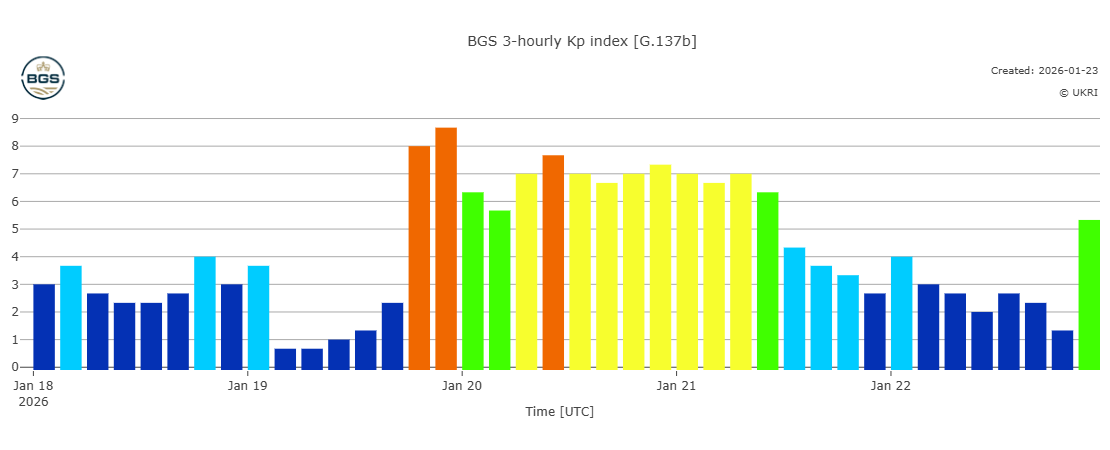
The coronal mass ejection (CME) associated with the long-duration X1.9 class solar flare on 18th Jan arrived at the Earth’s magnetosphere in the early evening on 19th Jan, taking only 25 hours to traverse the Sun-Earth distance of about 1.5 million km, giving an approximate speed of 1635 km/s - sure to qualify for a speeding ticket!
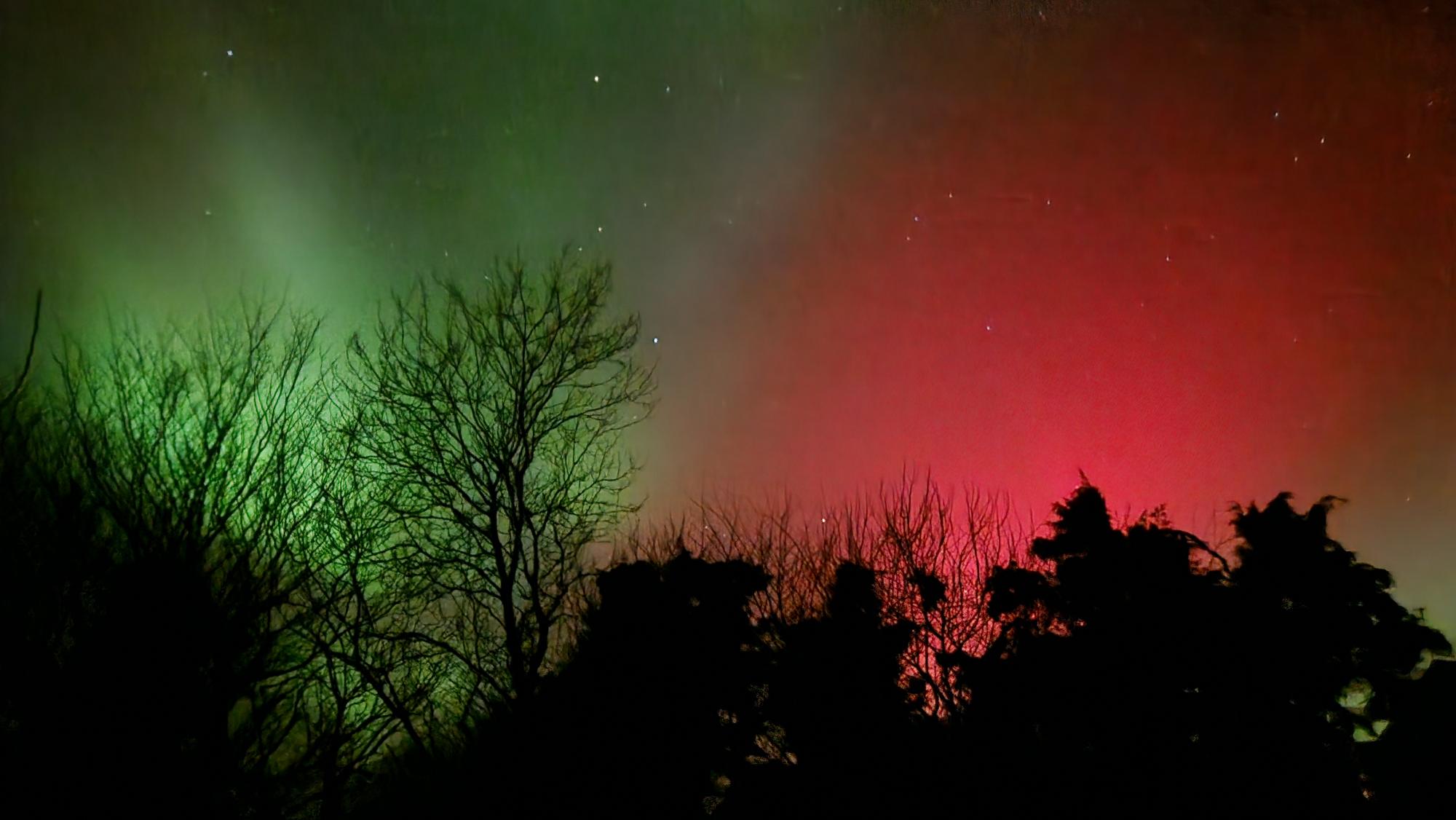
A sudden storm commencement was recorded in the magnetic field measurements at 19:17 UT on 19th Jan. In response geomagnetic conditions reached STORM G4 levels for the first 6 hours of the event, followed by STORM G3 conditions for the next 48 hours. Aurora was visible even in the southern parts of the UK, as captured at the Hartland geomagnetic observatory in North Devon. This geomagnetic STORM has now died down, and conditions are gradually subsiding towards ambient levels.
Sign-up to receive Geomagnetic Storm Forecast emails.
Follow us on Twitter:
Follow @BGSauroraAlert for more occasional aurora alerts.
Follow @BGSspaceWeather for daily space weather forecasts.
Glossary
- BGS
- The British Geological Survey is a geoscience research centre that is part of UK Research and Innovation (UKRI) and affiliated to the Natural Environment Research Council (NERC).
- CME or Coronal Mass Ejection
- The eruption of a portion of the outer atmosphere of the Sun into space, caused by rapid changes in its magnetic field. Often occurs along with a solar flare.
- Solar Flare
- Energy released by the explosive reorganisation of magnetic fields within the Sun's atmosphere.